Wednesday, July 10, 2024

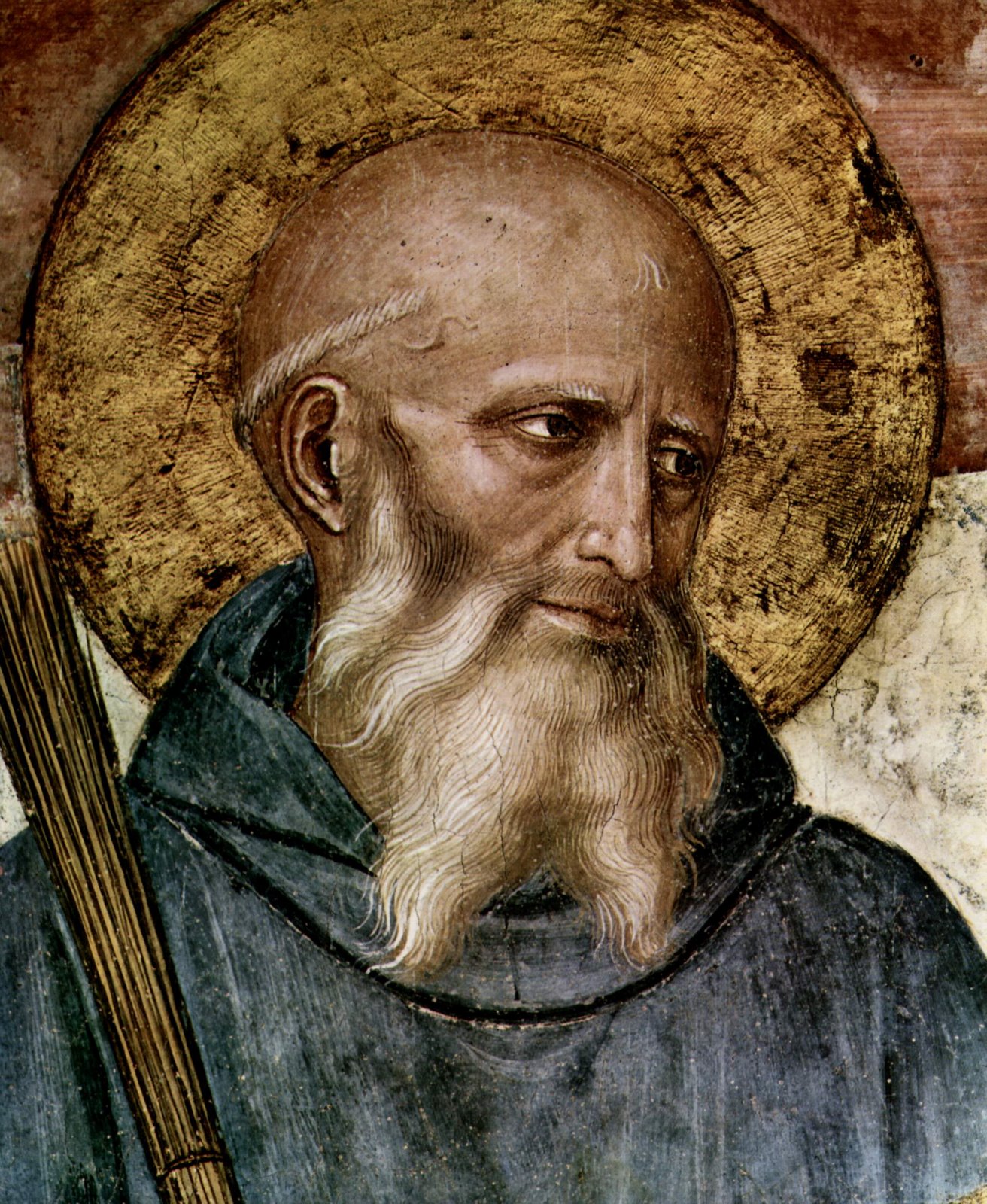
Memorial of Saint Benedict, Abbot

“Saint Benedict”
by Fra Angelico,1387
 
Readings for Thursday of the Fourteenth Week in Ordinary Time [1]
 
Readings from the Jerusalem Bible [2]
 
Readings and Commentary: [3]
 
Reading 1: Hosea 11:1-4, 8e-9
 
Thus says the Lord:
When Israel was a child I loved him,
out of Egypt I called my son.
The more I called them,
the farther they went from me,
Sacrificing to the Baals
and burning incense to idols.
Yet it was I who taught Ephraim to walk,
who took them in my arms;
I drew them with human cords,
with bands of love;
I fostered them like one
who raises an infant to his cheeks;
Yet, though I stooped to feed my child,
they did not know that I was their healer.
 
My heart is overwhelmed,
my pity is stirred.
I will not give vent to my blazing anger,
I will not destroy Ephraim again;
For I am God and not man,
the Holy One present among you;
I will not let the flames consume you.
-------------------------------------------
Commentary on Hos 11:1-4, 8e-9
 
The prophet Hosea, speaking with God’s voice, uses the metaphor of a parent’s love for a child to express God’s love for the people of Israel and Ephraim. With love, says the prophet, God sees the people as a child who turns away from their parent, turning their backs upon the Lord and sacrificing to other gods. In spite of this faithless behavior, Hosea’s oracle promises not to destroy them (again) by flames. (Note: in part d of v. 8, not included in the passage we read today, the prophet makes reference to Admah and Zeboiim: cities destroyed with Sodom and Gomorrah (Deuteronomy 29:22)).
 
CCC: Hos 11 219; Hos 11:1-4 370; Hos 11:1 219, 441, 530; Hos 11:9 208
-------------------------------------------
Responsorial Psalm: Psalm 80:2ac and 3b, 15-16
 
R. (4b) Let us see your face, Lord, and we shall be saved.
 
O shepherd of Israel, hearken.
From your throne upon the cherubim, shine forth.
Rouse your power.
R. Let us see your face, Lord, and we shall be saved.
 
Once again, O Lord of hosts,
look down from heaven, and see:
Take care of this vine,
and protect what your right hand has planted,
the son of man whom you yourself made strong.
R. Let us see your face, Lord, and we shall be saved.
-------------------------------------------
Commentary on Ps 80:2ac and 3b, 15-16
 
Psalm 80 is a communal lament. Here the community exalts the king who shepherds Israel with fidelity and calls upon God to continue to protect his special creation, the people he has called.
 
-------------------------------------------
Gospel: Matthew 10:7-15
 
Jesus said to his Apostles:
“As you go, make this proclamation:
‘The Kingdom of heaven is at hand.’
Cure the sick, raise the dead,
cleanse the lepers, drive out demons.
Without cost you have received; without cost you are to give.
Do not take gold or silver or copper for your belts;
no sack for the journey, or a second tunic,
or sandals, or walking stick.
The laborer deserves his keep.
Whatever town or village you enter, look for a worthy person in it,
and stay there until you leave.
As you enter a house, wish it peace.
If the house is worthy,
let your peace come upon it;
if not, let your peace return to you.
Whoever will not receive you or listen to your words
go outside that house or town and shake the dust from your feet.
Amen, I say to you, it will be more tolerable
for the land of Sodom and Gomorrah on the day of judgment
than for that town.”
-------------------------------------------
Commentary on Mt 10:7-15
 
Jesus instructs the apostles, as he sends them on their mission to proclaim the kingdom of God. They are to go into the world without any provisions, and will depend upon the generosity of others. The Lord gives them authority over all manner of diseases and afflictions, but reminds them that they are not to request payment for these gifts of healing.
 
The Lord's instructions end with a warning to those who reject the proclamation of the kingdom of God.  Jesus tells the apostles that those who reject the peace they offer will suffer, like those cut off from God's grace by the judgment upon those who perished in the destruction of Sodom and Gomorrah (see Genesis 19:1-26).
 
CCC: Mt 10:5-7 543; Mt 10:8 1509, 2121, 2443; Mt 10:10 2122
-------------------------------------------
Reflection:
 
Yet, though I stooped to feed my child,
they did not know that I was their healer.
(Hosea 11:4c)
 
While the prophet Hosea, speaking with the voice of God, was prophesying about Israel’s fall from grace and the knowledge of the Father, his analogy of feeding his children is apt.  We come to the house of God, this earthly building, to be fed, to be healed, because we understand that the spiritual gifts that flow from this altar in the form of bread and wine are the healing presence of the One Lord.
 
How many of our brothers and sisters have been so drained of God’s grace that they cannot see that gift?  How many do not understand, even when the Savior stoops to feed them, that they can be healed?  This is the Good News of the kingdom of God!  This is the message our Lord asks us to bring to the world.  This is what he sends us to do, just as he once sent his apostles.
 
It is only through God’s grace that the healing hand of the Savior can be revealed.  It is almost a Catch-22. One cannot feel the Son’s presence without the grace that comes from the Son’s presence.  But we can provide that conduit.  We can show those we meet the path to their own peace through our peace, which, in the name of Jesus, we can impart to them.
 
Today, as we go about our lives in the world, let us go with the message our Lord gave to his apostles, and give his peace to those we meet.  In this way, we announce that the kingdom of God is at hand.
 
Pax

[1] The picture is from the Darmstadt Altarpiece: “Saint Benedict” by Fra Angelico,1387.
[2] S.S. Commemoratio
[3] The readings are taken from the New American Bible, with the exception of the psalm and its response which were developed by the International Committee for English in Liturgy (ICEL). This republication is not authorized by USCCB and is for private use only.

Monday of the Fourteenth Week in Ordinary Time


“Woman Healed Touching Jesus”
by Alexandre Bida 1874
 
Readings for Monday of the Fourteenth Week in Ordinary Time [1]
 
Readings from the Jerusalem Bible [2]
 
Readings and Commentary: [3]
 
Reading 1: Hosea 2:16, 17c-18, 21-22
 
Thus says the Lord:
I will allure her;
I will lead her into the desert
and speak to her heart.
She shall respond there as in the days of her youth,
when she came up from the land of Egypt.
 
On that day, says the Lord,
She shall call me “My husband,”
and never again “My baal.”
 
I will espouse you to me forever:
I will espouse you in right and in justice,
in love and in mercy;
I will espouse you in fidelity,
and you shall know the Lord.
-------------------------------------------
Commentary on Hos 2:16, 17c-18, 21-22
 
The prophet Hosea, voicing God’s hope for the people of Israel as a husband might speak to a wife who was unfaithful, exhorts the people to turn from idolatry (the worship of Baal). He tells them that if they will be faithful, God’s love and mercy will be theirs: it is eternal, and God is always faithful. In Hebrew tradition "espousing" would include the gifts for the bride (cf. Genesis 24:53). It is thought by many scholars that the prophet went through a personal trial with an unfaithful spouse which colored his prophetic writings, using the analogy of Israel as the espoused people throughout this book.
 
CCC: Hos 2 218; Hos 2:21-22 2787
-------------------------------------------
Responsorial Psalm: Psalm 145:2-3, 4-5, 6-7, 8-9
 
R. (8a) The Lord is gracious and merciful.
 
Every day will I bless you,
and I will praise your name forever and ever.
Great is the Lord and highly to be praised;
his greatness is unsearchable.
R. The Lord is gracious and merciful.
 
Generation after generation praises your works
and proclaims your might.
They speak of the splendor of your glorious majesty
and tell of your wondrous works.
R. The Lord is gracious and merciful.
 
They discourse of the power of your terrible deeds
and declare your greatness.
They publish the fame of your abundant goodness
and joyfully sing of your justice.
R. The Lord is gracious and merciful.
 
The Lord is gracious and merciful,
slow to anger and of great kindness.
The Lord is good to all
and compassionate toward all his works.
R. The Lord is gracious and merciful.
-------------------------------------------
Commentary on Ps 145:2-3, 4-5, 6-7, 8-9
 
Psalm 145 is a hymn of praise. These strophes (because it is in the acrostic form, each verse beginning with a successive letter of the Hebrew alphabet) although loosely assembled, praise God for his mercy and compassion and give thanks for his creation and redemption.
 
CCC: Ps 145:3 300; Ps 145:9 295, 342
-------------------------------------------
Gospel: Matthew 9:18-26
 
While Jesus was speaking, an official came forward,
knelt down before him, and said,
“My daughter has just died.
But come, lay your hand on her, and she will live.”
Jesus rose and followed him, and so did his disciples.
A woman suffering hemorrhages for twelve years came up behind him
and touched the tassel on his cloak.
She said to herself, “If only I can touch his cloak, I shall be cured.”
Jesus turned around and saw her, and said,
“Courage, daughter! Your faith has saved you.”
And from that hour the woman was cured.
 
When Jesus arrived at the official’s house
and saw the flute players and the crowd who were making a commotion,
he said, “Go away! The girl is not dead but sleeping.”
And they ridiculed him.
When the crowd was put out, he came and took her by the hand,
and the little girl arose.
And news of this spread throughout all that land.
-------------------------------------------
Commentary on Mt 9:18-26
 
Jesus continues his journey in this passage from Matthew’s Gospel. Again, he engages in healing those who have faith in him. First, in a situation similar to the incident with the centurion's servant (Matthew 8:5-11; Luke 7:1-10), he is asked to help an official. As he is responding to that request, a woman with a hemorrhage approaches Jesus and reaches out to him. As she touches the tassel of his cloak, she experiences healing in that touch. In Mark and Luke the story is much more detailed. The Lord feels this touch and seeks out the woman (see Mark 5:25-34; Luke 8:43-48).
 
It is important to note that the woman, because of her hemorrhage, would have been considered "ritually impure" and excluded from all communal worship (Leviticus 15:19-23).  Through Christ's touch, she would have been allowed to return to God in worship.
 
Jesus arrives at the official's home (it is Mark’s Gospel that gives us the name Jairus) and heals his daughter. In Mark’s Gospel (Mark 5:23) she was at the point of death, here she had already “fallen asleep,” meaning she had died. Again, Jesus, seeing the faith of the requester, raises her from her deathbed to new life.
 
-------------------------------------------
Reflection:
 
If we truly believe in the authority of Christ over death, death itself ceases to be a cause for fear. If we truly believe Christ can heal us, a touch of his cloak will accomplish that healing. How difficult it is to take that leap of faith. The Lord was wise indeed when he said, “whoever does not accept the kingdom of God like a child will not enter it." (Mark 10:15)
 
Once more I borrow from Fr. Simeon’s Fire of Mercy as he says in speaking of the official Jairus’ approach to the Messiah: “He is an archon—a principal official, a guide among men, an establisher of order and a representative of the ideal Jew in the synagogue community. But he comes to the Archon of all, to the Logos who is the foundation of all, and not only an image of the source. ‘In the beginning (ἄϱχή) was the Word’ (Jn 1:1) is not primarily a temporal statement. The Word is at the head of all things, at the Origin itself. While this archon keeps order in his local synagogue, Christ the Word establishes the whole cosmos in harmony. For resurrection, the mourning father wisely comes to the very source of life, whom the liturgy often addresses as the Ἀϱχηγὸς τῆς ζωῆς—the first cause, author, and king of life.” [4]
 
How can we come to such faith? We know and understand that faith is a gift from God, and that through it flows all the grace and strength we need. We know that faith, like physical strength, can be grown through proper exercise and diet (exercise for faith is prayer and diet is the Word and sacraments). And herein lies the paradox. As we mature in our faith, we see all the depth and complexity of the truth Christ was pleased to reveal to us. We hear his command to love God and others. We can comprehend that this is done most completely by an innocent child (before they are taught by us not to trust or even speak to strangers). How insidious is the evil one, who forces us to take away that innocence for their protection?
 
Yet our own experiences of life force us to take a more mature view of the world and people around us. Our experiences of being hurt, having our trust violated, and being hated by others causes us to reject the innocent faith we need to embrace Christ’s teachings. Always it seems that even as we reach out to touch that tassel of Jesus’ cloak, we pull back, afraid of what will happen (or what will not).
 
Today we pray for faith, the innocent faith of a child, that through it we might experience the healing miracle of the woman with a hemorrhage, who through her faith was cured. May God grant us trust in his infinite love and compassion this day.
 
Pax

[1] The picture used today is “Woman Healed Touching Jesus” by Alexandre Bida 1874.
[2] S.S. Commemoratio
[3] The readings are taken from the New American Bible, with the exception of the psalm and its response which were developed by the International Committee for English in Liturgy (ICEL). This republication is not authorized by USCCB and is for private use only.
[4] Fire of Mercy Heart of the Word Volume I, Erasmo Leiva-Merikakis, Ignatius Press, San Francisco, CA, © 1996 p. 372.

Tuesday, July 09, 2024

Wednesday of the Fourteenth Week in Ordinary Time

“Communion of the Apostles”
by Luca Signorelli, 1512
 
Readings for Wednesday of the Fourteenth Week in Ordinary Time [1]
 
Readings from the Jerusalem Bible [2]
 
Readings and Commentary: [3]
 
Reading 1: Hosea 10:1-3, 7-8, 12
 
Israel is a luxuriant vine
whose fruit matches its growth.
The more abundant his fruit,
the more altars he built;
The more productive his land,
the more sacred pillars he set up.
Their heart is false,
now they pay for their guilt;
God shall break down their altars
and destroy their sacred pillars.
If they would say,
“We have no king”—
Since they do not fear the Lord,
what can the king do for them?
 
The king of Samaria shall disappear,
like foam upon the waters.
The high places of Aven shall be destroyed,
the sin of Israel;
thorns and thistles shall overgrow their altars.
Then they shall cry out to the mountains, “Cover us!”
and to the hills, “Fall upon us!”
 
“Sow for yourselves justice,
reap the fruit of piety;
break up for yourselves a new field,
for it is time to seek the Lord, till he come and rain down justice upon you.”
-------------------------------------------
Commentary on Hos 10:1-3, 7-8, 12
 
The prophet Hosea speaks of the relationship between secular success and the erosion of faith. The people have moved away from the fidelity demanded by God’s covenant, even to a point where they seem to be seeking a king other than God (as described in 1 Samuel 8:6ff). They have adopted pagan practices, setting up pillars and altars to false gods.  The oracle of Hosea predicts the destruction of these places of false worship and finally exhorts the people to return to genuine love of God (“Sow for yourselves justice, reap the fruit of piety; break up for yourselves a new field”).
 
-------------------------------------------
Responsorial Psalm: Psalm 105:2-3, 4-5, 6-7
 
R. (4b) Seek always the face of the Lord.
or:
R. Alleluia.
 
Sing to him, sing his praise,
proclaim all his wondrous deeds.
Glory in his holy name;
rejoice, O hearts that seek the Lord!
R. Seek always the face of the Lord.
or:
R. Alleluia.
 
Look to the Lord in his strength;
seek to serve him constantly.
Recall the wondrous deeds that he has wrought,
his portents, and the judgments he has uttered.
R. Seek always the face of the Lord.
or:
R. Alleluia.
 
You descendants of Abraham, his servants,
sons of Jacob, his chosen ones!
He, the Lord, is our God;
throughout the earth his judgments prevail.
R. Seek always the face of the Lord.
or:
R. Alleluia.
-------------------------------------------
Commentary on Ps 105:2-3, 4-5, 6-7
 
Psalm 105 is a historical psalm of thanksgiving in hymnic style. This selection is an introduction. It remembers God’s covenant with Abraham, the promise of the land of Canaan, and calls for continued faithfulness. Recalling this historical relationship, the psalmist calls the people to faithful worship. Reference to Abraham’s descendants also provides an image used by St. Paul providing substance to the promise fulfilled in Christ (see Philippians 3:3-8a and Galatians 3:22-29).
 
CCC: Ps 105:3 30
-------------------------------------------
Gospel: Matthew 10:1-7
 
Jesus summoned his Twelve disciples
and gave them authority over unclean spirits to drive them out
and to cure every disease and every illness.
The names of the Twelve Apostles are these:
first, Simon called Peter, and his brother Andrew;
James, the son of Zebedee, and his brother John;
Philip and Bartholomew,
Thomas and Matthew the tax collector;
James, the son of Alphaeus, and Thaddeus;
Simon the Cananean, and Judas Iscariot
who betrayed Jesus.
 
Jesus sent out these Twelve after instructing them thus,
“Do not go into pagan territory or enter a Samaritan town.
Go rather to the lost sheep of the house of Israel.
As you go, make this proclamation: ‘The Kingdom of heaven is at hand.’”
-------------------------------------------
Commentary on Mt 10:1-7
 
Following the instructions to the Twelve on how they are to evangelize given in the preceding chapter, Jesus now sends them out. St. Matthew’s Gospel does not tell the stories of how they were called but provides the names and mission of the disciples. It is only in Matthew that the Twelve are designated as apostles reflecting the mission and role they fulfill. They are then sent, but only to the “chosen people.” This focus on the Jewish audience tells us that St. Matthew’s Gospel was originally directed principally at Hebrew Christians.
 
CCC: Mt 10:5-7 543
-------------------------------------------
Reflection:
 
We get the sense that some things never change as we consider Hosea exhorting the Hebrew people.  Written between 750 and 732 BC, the prophet called on them to repent, and return to the Lord. Similarly, Jesus sent the Twelve out to the same people of his time with essentially the same mission.  The people of Hosea’s day had been successful in dealing with the secular societies surrounding the northern kingdoms of Samaria and Israel.  They had fallen away from their centralized worship of God and taken to the pagan practice of setting up local “pillars” in lip service to God’s authority.  But they truly worshiped their own success in commerce.
 
With a slightly different flavor, the Hebrews of Jesus’ day had also gotten away from God’s call to holiness and had allowed their practice to become an exterior façade rather than true worship.  The temple had become a place of commerce; its power, while symbolically and traditionally centered on historical religious traditions, was in the financial wealth it represented.  Jesus attacked this structure.  When he sent his disciples out, they were to announce that the kingdom of God was at hand, call for individual conversion and repentance, and for reuniting themselves as children of God.
 
Looking at these two examples from history, we can see how these same forces are at work today.  Secular wealth and a fundamental motivation of greed are the principal forces that move our society.  Into this environment we are sent, to call those we meet back to the Lord’s values, back to respecting and loving each person, and making human dignity a priority in how we live and interact with others.  We are asked to provide an example of what it means to live Christian values, as Jesus commended to us. 
 
Some things never change, and the mission of the Twelve is passed to us.  With all our hearts and minds, we are asked by the Lord to take his message into a world that does not want to hear it.  It is a message of peace and love, a message of faith in one who will make all things new.  We pray today that we can faithfully carry this Good News to the world and provide the path to salvation to all we meet.
 
Pax

[1] The picture is “Communion of the Apostles” by Luca Signorelli, 1512.
[2] S.S. Commemoratio
[3] The readings are taken from the New American Bible, with the exception of the psalm and its response which were developed by the International Committee for English in Liturgy (ICEL). This republication is not authorized by USCCB and is for private use only.

Monday, July 08, 2024

Tuesday of the Fourteenth Week in Ordinary Time

Optional Memorial for Saint Augustine Zhao Rong, Priest, and Companions, Chinese Martyrs
“Le Christ Guerissant un Malade”
[Christ Healing the Sick]
by Mathieu Ignace van Bree (1773-1839)

Readings for Tuesday of the Fourteenth Week in Ordinary Time [1]
 
Readings from the Jerusalem Bible [2]
 
Readings and Commentary:[3]
 
Reading 1: Hosea 8:4-7, 11-13
 
Thus says the Lord:
They made kings in Israel, but not by my authority;
they established princes, but without my approval
. With their silver and gold they made
idols for themselves, to their own destruction.
Cast away your calf, O Samaria!
my wrath is kindled against them;
How long will they be unable to attain
innocence in Israel?
The work of an artisan,
no god at all,
Destined for the flames—
such is the calf of Samaria!
 
When they sow the wind,
they shall reap the whirlwind;
The stalk of grain that forms no ear
can yield no flour;
Even if it could,
strangers would swallow it.
 
When Ephraim made many altars to expiate sin,
his altars became occasions of sin.
Though I write for him my many ordinances,
they are considered as a stranger’s.
Though they offer sacrifice,
immolate flesh and eat it,
the Lord is not pleased with them.
He shall still remember their guilt
and punish their sins;
they shall return to Egypt.
-------------------------------------------
Commentary on Hos 8:4-7, 11-13
 
The prophet Hosea, speaking with the voice of God, condemns the people of Israel, Samaria, and Ephraim for falling away from the Law of Moses, and taking up the worship of Baal and other false practices (probably those of the local majority population). The prophet is eloquent in describing how these practices not only displease God but will not bring the result hoped for. (“When they sow the wind, they shall reap the whirlwind.”) He beckons them back to “innocence” in the precepts of the Lord.
 
-------------------------------------------
Responsorial Psalm: Psalm 115:3-4, 5-6, 7ab-8, 9-10
 
R. (9a) The house of Israel trusts in the Lord.
or:
R. Alleluia.
 
Our God is in heaven;
whatever he wills, he does.
Their idols are silver and gold,
the handiwork of men.
R. The house of Israel trusts in the Lord.
or:
R. Alleluia.
 
They have mouths but speak not;
they have eyes but see not;
They have ears but hear not;
they have noses but smell not.
R. The house of Israel trusts in the Lord.
or:
R. Alleluia.
 
They have hands but feel not;
they have feet but walk not.
Their makers shall be like them,
everyone that trusts in them.
R. The house of Israel trusts in the Lord.
or:
R. Alleluia.
-------------------------------------------
Commentary on Ps 115:3-4, 5-6, 7ab-8, 9-10
 
Psalm 115 is a hymn of praise to our God who is above all things and creator of all. While he is not seen, all creation is evidence of his power and salvation. The singer attacks those who worship false gods and idols, promoting the first of the Ten Commandments: "You shall not have other gods beside me. You shall not make for yourself an idol or a likeness of anything in the heavens above or on the earth below or in the waters beneath the earth; you shall not bow down before them or serve them." (Exodus 20:4-5)
 
CCC: Ps 115:3 268, 303; Ps 115:4-5 2112; Ps 115:8 2112
-------------------------------------------
Gospel: Matthew 9:32-38
 
A demoniac who could not speak was brought to Jesus,
and when the demon was driven out the mute man spoke.
The crowds were amazed and said,
“Nothing like this has ever been seen in Israel.”
But the Pharisees said,
“He drives out demons by the prince of demons.”
 
Jesus went around to all the towns and villages,
teaching in their synagogues,
proclaiming the Gospel of the Kingdom,
and curing every disease and illness.
At the sight of the crowds, his heart was moved with pity for them
because they were troubled and abandoned,
like sheep without a shepherd.
Then he said to his disciples,
“The harvest is abundant but the laborers are few;
so ask the master of the harvest
to send out laborers for his harvest.”
-------------------------------------------
Commentary on Mt 9:32-38
 
In this selection Jesus continues his healing practice as he travels from town to town. We see growing opposition from the Pharisees as he does so. Almost ironically, Jesus looks with compassion upon the people ("his heart was moved with pity for them") as he sees that the religious leaders, the scribes and Pharisees, have not led them to God but abandoned them, seeking instead their own selfish ends.  The Lord recalls the prophecy of Ezekiel, predicting someone from the line of David as a new shepherd. This prophetic statement was fulfilled in himself (Ezekiel 34:23). And, using the same language we heard in Luke 10:1-9, Jesus prepares to send out the disciples to proclaim the Good News; the disciples are to become laborers.
 
CCC: Mt 9:38 2611
-------------------------------------------
Reflection:
 
Do you recall having your parents tell you that, before you could go out and play, you had to clean your room (or some other equally difficult chore)?  If it was something that you should have been doing right along, and now it had become a huge task, you might get an idea of what Jesus must have been feeling as he went from town to town trying to get people to understand what he meant by “the kingdom of God is at hand.”
 
Just as when we were children, and wanted to do something important, like go and play with our friends, and Saturday had only so many hours, Jesus was anxious to get his task accomplished, but there was so much to do.  He says (and we can almost hear the exasperation in him) “The harvest is abundant but the laborers are few.”  In other words, there is much good to be gained in announcing the kingdom of God, but too few will take up the call, and too many are resisting.
 
While the call has been taken up by others over the two thousand years since Christ walked among us, there is still much to be done and too few to do it.  Each of us is enlisted in the battle, and it is a battle.  In Jesus’ day, the Gospel tells us that there were many who resisted his message, and many denied his identity.  Today the resistance is, if anything, stronger, and the message of the enemy more seductive.
 
Everyone is called, baptized into this mighty work.  So how do we serve?  God has given each of us gifts.  Those gifts vary from person to person, and each is valuable.  Some have the gift of persuasion, others the gift of a pious spirit.  St. Augustine put it well when he said at his consecration as bishop:
 
“The turbulent have to be corrected, the faint-hearted cheered up, the weak supported; the Gospel's opponents need to be refuted, its insidious enemies guarded against; the unlearned need to be taught, the indolent stirred up, the argumentative checked; the proud must be put in their place, the desperate set on their feet, those engaged in quarrels reconciled; the needy have to be helped, the oppressed to be liberated, the good to be encouraged, the bad to be tolerated; all must be loved.

“The Gospel terrifies me.” – St. Augustine
 
“The harvest is abundant but the laborers are few.”  Today we are called again to pick up the standard of Christ and carry it into the world.  Today we pray for the strength of character to labor in God’s harvest.
 
Pax

[1] The picture used today is “Le Christ Guerissant un Malade” [Christ Healing the Sick] by Mathieu Ignace van Bree (1773-1839).
[2] S.S. Commemoratio
[3] The readings are taken from the New American Bible, with the exception of the psalm and its response which were developed by the International Committee for English in Liturgy (ICEL). This republication is not authorized by USCCB and is for private use only.
Saturday, July 06, 2024

Fourteenth Sunday in Ordinary Time

Catechism Links[1]
 
CCC 2581-2584: prophets and conversion of heart
CCC 436: Christ as prophet
CCC 162: perseverance in faith
CCC 268, 273, 1508: power is made perfect in weakness

“Jesus at the Brow of the Hill in Nazareth”
by James Tissot, 1886-96

Readings for Fourteenth Sunday in Ordinary Time [2]

Readings from the Jerusalem Bible [3]
 
Readings and Commentary:[4]
 
Reading 1: Ezekiel 2:2-5
 
As the LORD spoke to me, the spirit entered into me
and set me on my feet,
and I heard the one who was speaking say to me:
Son of man, I am sending you to the Israelites,
rebels who have rebelled against me;
they and their ancestors have revolted against me to this very day.
Hard of face and obstinate of heart
are they to whom I am sending you.
But you shall say to them: Thus says the LORD GOD!
And whether they heed or resist—for they are a rebellious house—
they shall know that a prophet has been among them.
-------------------------------------------
Commentary on Ez 2:2-5
 
The introduction to the prophet in the first chapter of the book of Ezekiel describes the heavenly vision in which the prophet is engaged. In the beginning of the second chapter, God issues his call to Ezekiel, sending him to call the Israelites back to faithfulness from which they had rebelled. The implication is clear: the prophet is to expect resistance, but God’s support will identify him as coming from the Lord God.
 
"Ezekiel never resists the voice of the Lord, never raises any personal objection or difficulty unlike Isaiah and Jeremiah. On the contrary, knowing that he is passing on a divine message, not inventing one of his own, he must do this bravely, and never flag, even if the people refuse to listen (cf. 2:6-7; 3:11). 'True prophets are those who say the words that God has spoken to them; the prophet of God is the one who delivers the words of God to men who cannot or do not deserve to understand God himself' (St Augustine, 'Quaestiones in Heptateuchum', 2, 17)."[5]
 
-------------------------------------------
Responsorial Psalm: Psalm 123:1-2, 2, 3-4
 
R. (2cd) Our eyes are fixed on the Lord, pleading for his mercy.
 
To you I lift up my eyes
who are enthroned in heaven —
As the eyes of servants
are on the hands of their masters.
R. Our eyes are fixed on the Lord, pleading for his mercy.
 
As the eyes of a maid
are on the hands of her mistress,
So are our eyes on the LORD, our God,
till he have pity on us.
R. Our eyes are fixed on the Lord, pleading for his mercy.
 
Have pity on us, O LORD, have pity on us,
for we are more than sated with contempt;
our souls are more than sated
with the mockery of the arrogant,
with the contempt of the proud.
R. Our eyes are fixed on the Lord, pleading for his mercy.
-------------------------------------------
Commentary on Ps 123:1-2, 2, 3-4
 
Psalm 123 is an individual lament. In these strophes we hear the prayer of the psalmist who expresses faith in God’s power. Using the image of the vulnerable servant, the song pleads to God for salvation from those who have the power to harm them.
 
-------------------------------------------
Reading II: 2 Corinthians 12:7-10
 
Brothers and sisters:
That I, Paul, might not become too elated,
because of the abundance of the revelations,
a thorn in the flesh was given to me, an angel of Satan,
to beat me, to keep me from being too elated.
Three times I begged the Lord about this, that it might leave me,
but he said to me, "My grace is sufficient for you,
for power is made perfect in weakness."
I will rather boast most gladly of my weaknesses,
in order that the power of Christ may dwell with me.
Therefore, I am content with weaknesses, insults,
hardships, persecutions, and constraints,
for the sake of Christ;
for when I am weak, then I am strong.
-------------------------------------------
Commentary on 2 Cor 12:7-10
 
As part of his defense of his own apostolate, St. Paul describes, in rather convoluted terms, an out-of-body experience in which Christ revealed the mission he was to undertake. Rather than helping him, these revelations brought persecution, “a thorn in the flesh.” The apostle uses his Christ-like response to physical and rhetorical challenges by saying that, through his weakness and humility, he is given the power of the Holy Spirit to carry on the Lord’s work.
 
“The passage also shows us what attitude we should take to our own weakness: 'We have to glory.' St Alphonsus says, 'in the knowledge of our own weakness in order to acquire the strength of Jesus Christ, which is holy humility,' without 'giving in to lack of confidence, as the devil wants, and falling into more serious sins' ('Treasury of Preaching Material', II, 6).” [6]
 
CCC: 2 Cor 12:9 268, 273, 1508
-------------------------------------------
Gospel: Mark 6:1-6
 
Jesus departed from there and came to his native place, accompanied by his disciples.
When the sabbath came he began to teach in the synagogue,
and many who heard him were astonished.
They said, "Where did this man get all this?
What kind of wisdom has been given him?
What mighty deeds are wrought by his hands!
Is he not the carpenter, the son of Mary,
and the brother of James and Joses and Judas and Simon?
And are not his sisters here with us?"
And they took offense at him.
Jesus said to them,
"A prophet is not without honor except in his native place
and among his own kin and in his own house."
So he was not able to perform any mighty deed there,
apart from curing a few sick people by laying his hands on them.
He was amazed at their lack of faith.
-------------------------------------------
Commentary on Mk 6:1-6
 
This passage is St. Mark’s account of the Lord returning to his home town. As is his custom, he goes to speak in the synagogue and amazes the people he grew up with. The Lord encounters intense skepticism, born out of the fact that the people knew him before he took up his mission. In St. Luke's version (Luke 4:28ff), reference is made to the feeling that Jesus, in assuming the role of the Messiah, had blasphemed. The resulting attempt on his life is omitted in St. Mark's Gospel, but we still see the Lord’s response to their lack of faith. Non-canonical documents of the early Church Fathers (c. 400) refer to the relationships of the brothers and sisters of Jesus.  See The History of Joseph the Carpenter.
 
CCC: Mk 6:3 500; Mk 6:5 699; Mk 6:6 2610
-------------------------------------------
Reflection:
 
There have been numerous stories written about people returning to their hometowns, sometimes as successes and sometimes as failures. In almost all of those stories, the person returning finds the people have changed or seem to have changed. Attitudes toward that individual are different, or so it seems. It is something like going back to the playground you knew as a child, and seeing the “big slide” you remember being quite small. Ultimately there is truth to the old saying: “you can’t go home.” What you knew and how you knew it will not be the same.
 
Jesus finds the same situation in the Gospel story today. He goes home and, as it was his custom when he was still living with his parents, he went to the synagogue on the Sabbath. When he got up and took part in the service, the people who had known him since he was a boy rejected what he had to say, not because they were not amazed (certainly they must have been), but rather because it was Joseph’s son Jesus, who was teaching from the Scriptures. They knew him from boyhood, and while he was no doubt a model son and well respected by everyone, they probably had thought him a bit too good, perhaps even strange. Would we not think the same of a child who grew up with us, but never did anything wrong, never got into serious trouble, was always kind and thoughtful?
 
Here was this boy, now telling them what God was saying in Scriptures. Matthew says in his account of this homecoming (Matthew 13:54-58):
 
“They said, ‘Where did this man get all this?
What kind of wisdom has been given him?
What mighty deeds are wrought by his hands!
Is he not the carpenter, the son of Mary,
and the brother of James and Joses and Judas and Simon?
And are not his sisters here with us?’”
 
(As a side note; there is an ancient document from the around the fourth century called “The History of Joseph the Carpenter”  In that document the following mention is made regarding Jesus’ extended family:
 
“There was a man whose name was Joseph, sprung from a family of Bethlehem, a town of Judah, and the city of King David. This same man, being well furnished with wisdom and learning, was made a priest in the temple of the Lord. He was, besides, skillful in his trade, which was that of a carpenter; and after the manner of all men, he married a wife. Moreover, he begot for himself sons and daughters, four sons, namely, and two daughters. Now these are their names— Judas, Justus, James, and Simon. The names of the two daughters were Assia and Lydia. At length the wife of righteous Joseph, a woman intent on the divine glory in all her works, departed this life. But Joseph, that righteous man, my father after the flesh, and the spouse of my mother Mary, went away with his sons to his trade, practicing the art of a carpenter.”)
 
It was then that Jesus must have had that sinking feeling, saying to himself: “you can’t go home.”
 
We each are challenged by this same set of circumstances. We have come out of the long isolation of the pandemic, and it is time to bring the community back together to strengthen it.  While we may think of this as a call to reach out to the unchurched, or those who are not of the Catholic faith, the first demographic we must reach out to are those of us still in active communion with the faith community.  How can we give water to the thirsty when our own bucket is empty?  So, our first step is to get back to our own faith discipline.  We need to revitalize our own sense of involvement with the faith community.
 
We are asked to reach out to those who have fallen away or who are “marginally” Catholic (or not Catholic at all but interested). With this Gospel story from St. Mark staring us squarely in the face, we must ask: who among us does not have friends, family members or coworkers who fall into these categories? These are the ones we are called to reach out to first. And the Gospel shows us how!
 
Jesus does not “buttonhole” the unbelievers. He uses his words and actions as examples. He does not criticize people. He challenges their actions and calls them to a higher standard through his own behavior.
 
So what are we called to do? We are called become better Catholics, better Christians.
 
· We are asked, first, not to hide who we are and what we believe.
· We must show it. When talk of politics comes up at the office or at school or with friends,       we should be pointing out the threats to religious freedom and the erosion of values we see.
· When talk gets crude or bigoted we should be polite but firm, saying that we do not
  appreciate that kind of talk or humor or attitudes that demean others.
· We should be the first to help those in difficulty and demonstrate our adherence to the Great
  Commandment: “Love one another.”
 
And if we don’t feel comfortable taking these actions we must ask why. Is it because we don’t know how to say what needs to be said, or is it because we ourselves lack the courage?  We can educate ourselves to remedy the first and pray fervently to be given the second.
 
The Lord shows us what it is like to go home, to take a message to the people who know us best. He shows us the difficulty we will face. Our call is to follow his example. We must now look inside and find there the courage and will to follow the Lord’s example and our Church’s call.
 
Pax

[1] Catechism links are taken from the Homiletic Directory, published by the Congregation for Divine Worship and the Discipline of the Sacraments, 29 June 2014.
[2] The picture used is “Jesus at the Brow of the Hill in Nazareth” by James Tissot, 1886-96.
[3] S.S. Commemoratio
[4] The readings are taken from the New American Bible, with the exception of the psalm and its response which were developed by the International Committee for English in Liturgy (ICEL). This republication is not authorized by USCCB and is for private use only.
[5] The Navarre Bible, “Major Prophets,” Scepter Publishers, Princeton, NJ, © 2002, p. 606.
[6] The Navarre Bible, “Letters of St. Paul,” Scepter Publishers, Princeton, NJ, © 2003, p. 342.